THE SON OF A SOLDIER
Vincit’s childhood was forged in discipline. His father did not teach him letters before he taught him pain. At six, he learned to stand still beneath the sun without complaint. At eight, he carried stones up the Aventine Hill until his shoulders bled.
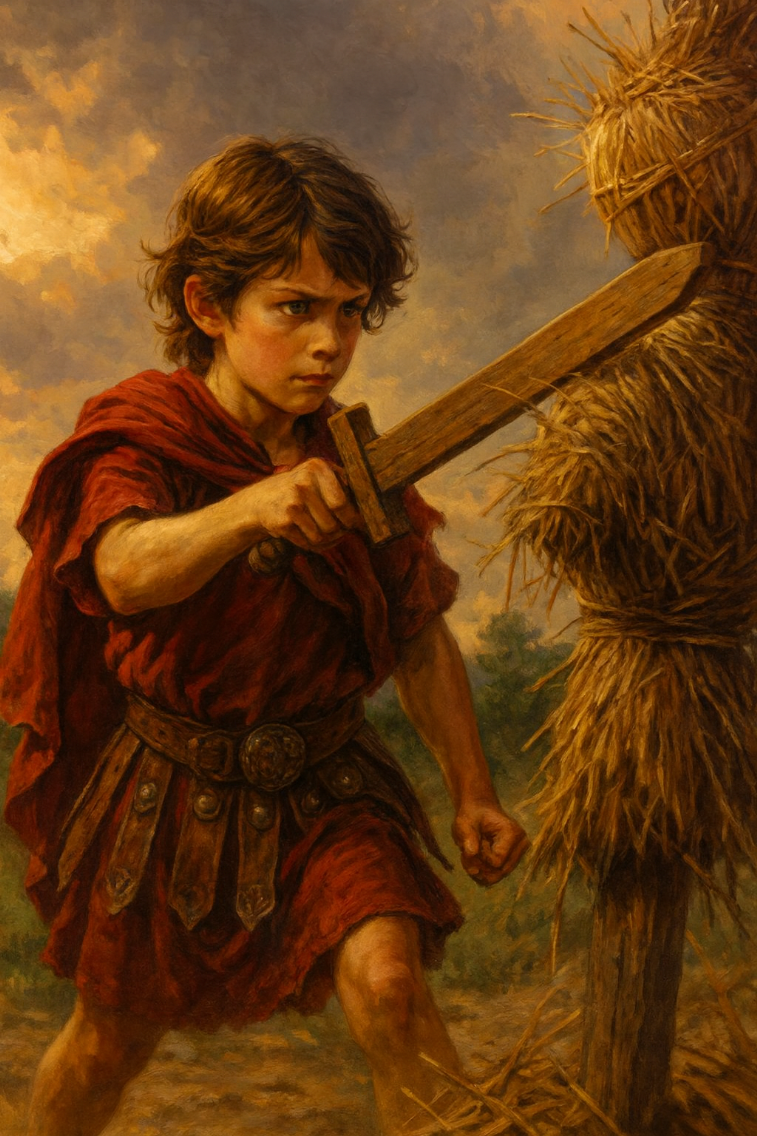
At ten, he held a wooden sword twice his weight and practiced thrust after thrust into a straw dummy his father had named “Gaul.”
“Not slashes,” Gaius would bark. “Rome does not slash. Rome thrusts.”
Yet Vincit was not cruel. He listened to old veterans speak of distant lands—Hispania’s dusty plains, the forests of Germania, the marble temples of Greece. He learned that Rome was not merely iron and blood. It was roads, law, language, and the idea that the world could be ordered.
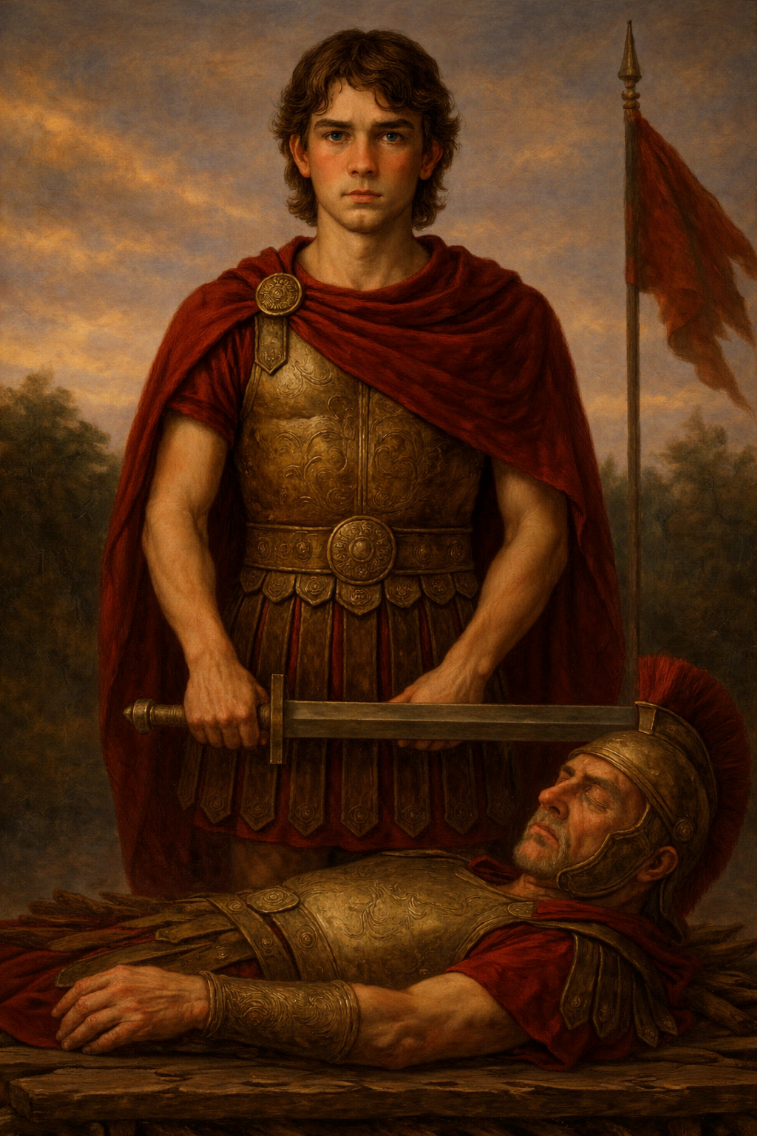
When he was fifteen, Gaius fell in battle against rebellious tribes in the north. His body returned on a shield. His last pay was placed in Livia’s hands. Vincit did not weep publicly. He stood straight beside the funeral pyre and swore an oath not to vengeance—but to greatness.
“I will rise,” he whispered into the smoke, “so high that Rome herself will speak my name.”